

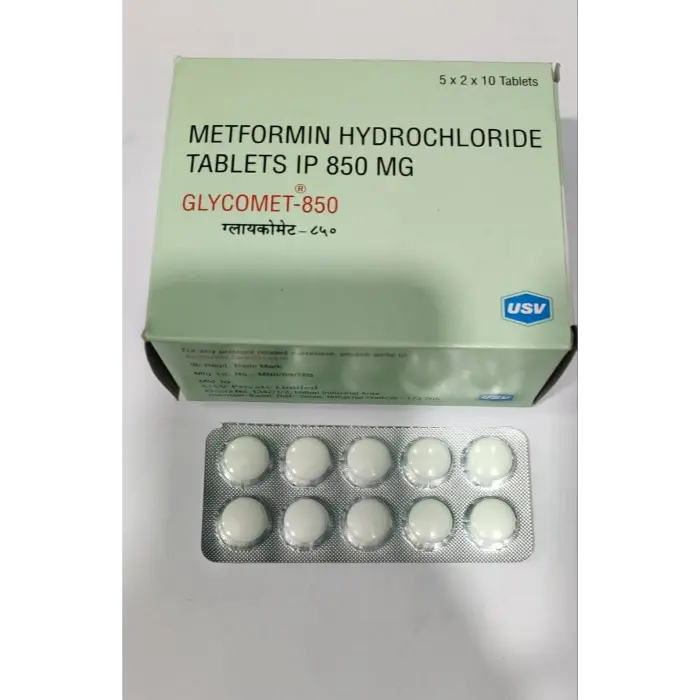
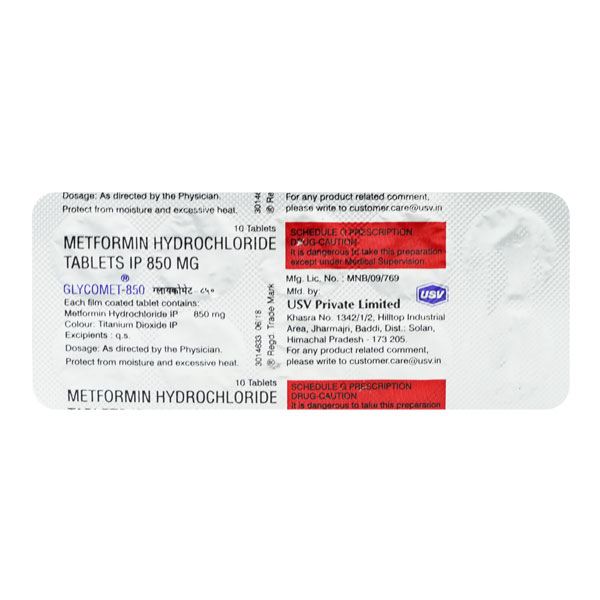
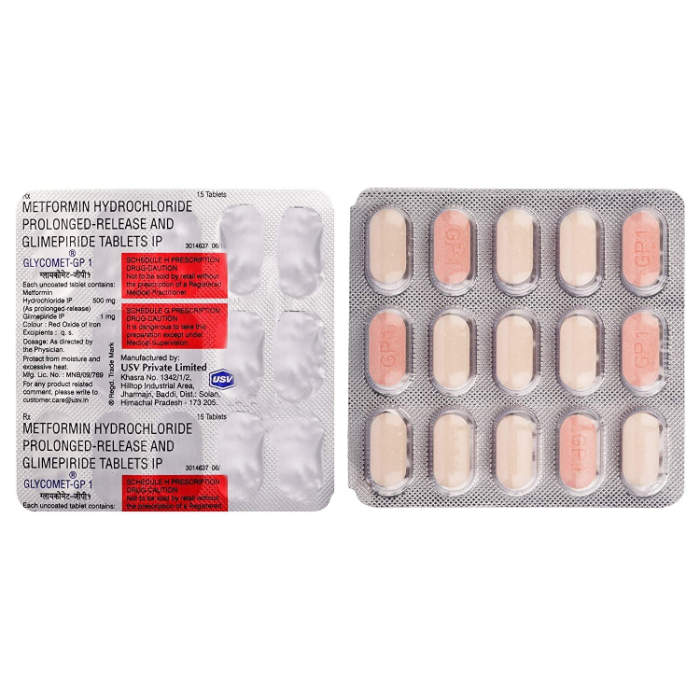
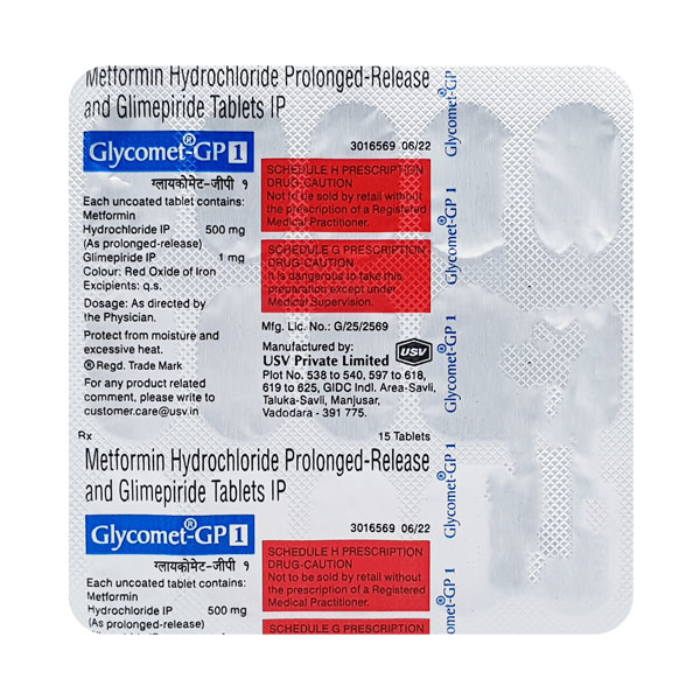
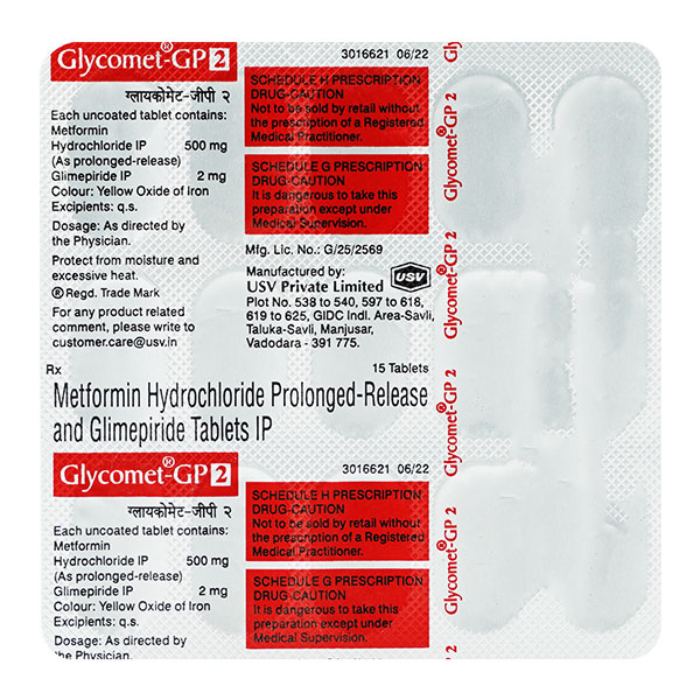
Glycomet 850mg
Price range: $5.50 through $10.00
Generic For: Glucophage
Generic Name: Metformin Hcl
Manufacturer: USV Ltd., India
Description
Glycomet 850 mg is an antidiabetic agent containing metformin as the active constituent. Metformin belongs to a class of drugs known as biguanides that can be administered alone or together with sulfonylureas. It is effective when used as an adjunct to diet and exercise to improve glycaemic control in adults and children with type 2 diabetes mellitus.
The exact mechanism of action of the drug is still not understood. Still, clinical studies suggest that the antidiabetic agent plays a part in increasing the adherence of insulin to its receptors and potentiating insulin action.
The management of Type 2 diabetes requires aggressive treatment to achieve glycaemic control and cardiovascular risk factor goals. To treat diabetes mellitus, metformin, an old and widely accepted first-line agent stands out not only for its ant glycaemic properties but also for its beneficial effects beyond glycaemic control. The antidiabetic drug is also known to improve oxidative stress lipid profiles, insulin resistance, and fat redistribution. These properties contribute to a decreased risk of cardiovascular outcomes. The only thing that could rearrange the metabolic activities are the ability to control the glycaemic index.
Metformin precautions
Glycomet or Glucophage dosage should not be used in patients with severe kidney problems, known hypersensitivity to metformin, or acute or chronic metabolic acidosis. Diabetic ketoacidosis should be treated with insulin. Before use, patients should read all the potential risks and benefits of Glycomet or Glucophage medicine. Also, understand the importance of adhering to dietary instructions, following a regular exercise program, and monitoring normal blood glucose levels and renal functions. There is a risk of lactic acidosis associated with the use of the antidiabetic drug. Patients should discontinue treatment straight away and promptly notify their doctor if myalgia, unusual tiredness, explained hyperventilation, or other non-specific symptoms occur. Once your body adapts to the medication and its effects, the gastrointestinal symptoms, common during the initial days of the treatment, are unlikely to be drug-related. Gastrointestinal symptoms in the later phase could be due to lactic acidosis or other serious complications. Patients should be careful about alcohol intake while receiving diabetes medicine.
Metformin side effects
Stop taking Glucophage or Glycomet 850 mg for a short time if you have a condition that may be associated with dehydration that causes significant loss of fluids. The symptoms include severe vomiting, fever, diarrhoea, and drinking less fluid. Speak to your doctor to get more information. Discontinue treatment and contact a doctor if you experience lactic acidosis symptoms, as this condition may lead to coma. Symptoms include stomachache, vomiting, muscle cramps, breathing difficulties, reduced body temperature, and severe tiredness. Lactic acidosis is severe and must be treated under the guidance of a doctor. If you are asked to undergo major surgery, you must discontinue treatment during and after some time of the procedure. Your doctor will decide when to discontinue treatment and restart the metformin therapy; doing this will keep Glucophage side effects at bay.
How to take metformin?
Glucophage or Glycomet 850 mg should be best taken with food to avoid nausea and abdominal pain. Follow your doctor’s instructions when it comes to taking medicine. Make sure you drink plenty of fluids while receiving this antidiabetic agent. The dosage is usually based on the medical condition, response to treatment, and the use of certain other medications. Do not break or chew the tablet; consume it with a glass of water.
Be sure to tell your doctor about all the medications you have been using and other medications, including prescription medications and herbal supplements. Your doctor may ask you to gradually begin with a lower metformin dose to reduce side effects.
Additional information
| Tablet/s | 30 Tablet/s, 60 Tablet/s, 90 Tablet/s |
|---|









Reviews
There are no reviews yet.