


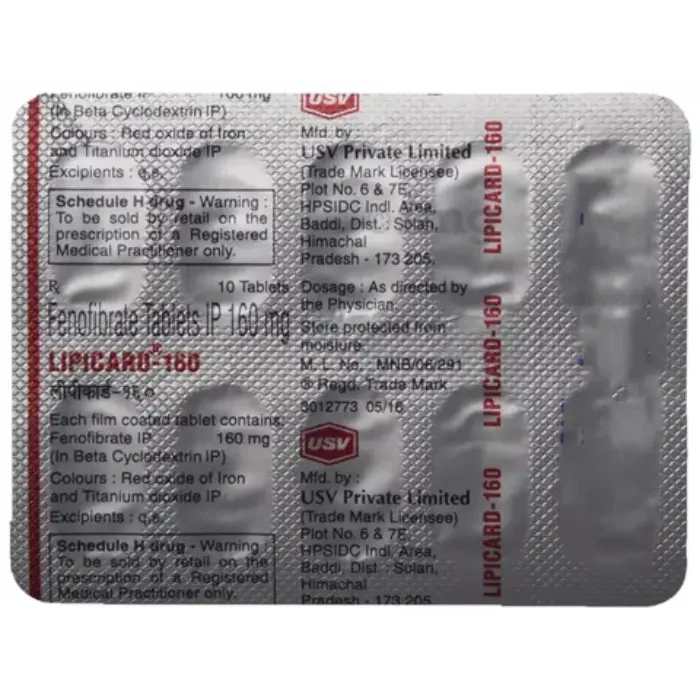
Lipicard 160mg
Generic For: Tricor
Generic Name: Fenofibrate
Manufacturer: USV Ltd., India
Description
Lipicard 160 mg containing Fenofibrate is a cholesterol (LDL or bad cholesterol) and triglycerides (fatty acids) lowering drug. It increases the levels of HDL or good cholesterol. Fenofibrate is prescribed along with a proper low-fat diet to treat high cholesterol. Elevated levels of cholesterol and triglycerides can lead to atherosclerosis (clogged arteries). By lowering triglycerides, Fenofibrate may reduce the risk of pancreatitis in people with high blood triglyceride levels. However, this medication might not be able to prevent heart attack or stroke.
Some of the most common adverse effects of Lipicard include dizziness, headache, wheezing, coughing, constipation, dyspepsia, wheezing, cough, constipation, asthenia, joint pain, wheezing, nasopharyngitis, and flu-like symptoms. Some serious side effects requiring dose adjustments or discontinuation may include elevated liver enzymes, arrhythmia exacerbation, and heart attack.
Take Lipicard strictly according to your doctor’s directions. Do not alter the dosage unless your doctor advises you to do so. Also, do not take this medication after the prescribed period is over. The medicine is available in the form of capsules that is administered orally once daily with or without food. The capsule must be swallowed whole, not chewed, crushed, or dissolved. The medicine may be considered an option for individuals taking moderate-intensity statin therapy if the benefits outweigh the potential risk of side effects. Dose adjustments are made based on the individual patient’s response.
Lipicard is part of a full line of blood pressure treatment, including diet restrictions, exercises, and other medicines. Follow a proper regimen as directed by your doctor to keep your cholesterol levels in check. If you are also taking other cholesterol-lowering drugs such as cholestyramine, colestipol, or colesevelam, take them at least 1 hour after or 4 hours before taking Fenofibrate.
Additional information
| Tablet/s | 30 Tablet/s, 60 Tablet/s, 90 Tablet/s |
|---|
Related products
-
Olmesar A 5 20mg
Price range: $22.00 through $53.00 -






Reviews
There are no reviews yet.